

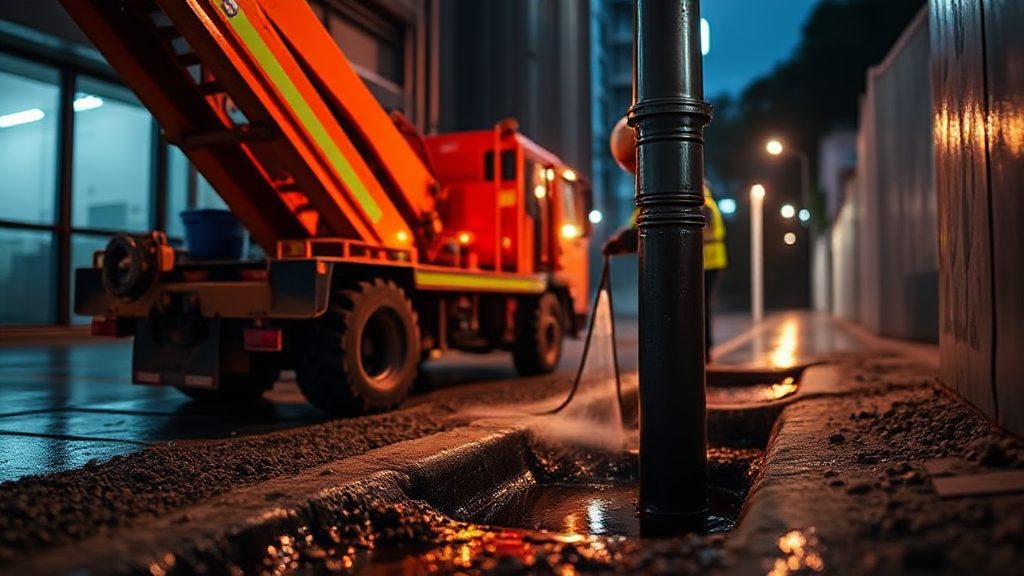
Blocked Drain in Santa Bárbara d’Oeste SP: Problems and Fixes
Before you call anyone, have three things ready: the exact address with any access instructions, a description of where the water backs up (sink, floor drain, toilet, or all at once), and whether the problem is in a house, apartment, or commercial kitchen. With that information, a desentupidora em Santa Bárbara d’Oeste SP can tell you whether you are facing a simple clog or a main-line blockage that needs a truck-mounted jetter. The rest of this routine is what I check on a first visit, problem by problem.
Problem 1: Water backing up in more than one fixture
When a kitchen sink and a bathroom floor drain both drain slowly or gurgle at the same time, the blockage is usually past the branch lines and into the main sewer connection. That changes the tools and the time needed. A hand snake will not clear it; you need a machine with enough cable to reach the inspection box or the street connection.
What I do first
I locate the cleanout or inspection box, open it, and watch the water level while a helper runs hot water inside. If the level rises in the cleanout, the clog is downstream. If it stays low, the problem is inside the house. This single check saves an hour of guessing and tells the technician whether to set up inside the yard or at the street.
Fix for a main-line clog
For roots, grease, or scale in the main line, a rotating cable opens a channel, then a high-pressure jetter washes the walls clean. In older Santa Bárbara d’Oeste neighborhoods, clay and cast-iron pipes are common, so I keep the jetter pressure moderate and use a camera after the wash to confirm there are no cracks. Never jet a line you have not inspected first, because high pressure can open an already damaged pipe.
Problem 2: Slow drains that keep coming back
A single drain that slows down every few weeks is not a one-time clog. It is a sign of buildup on the pipe walls, a partially collapsed section, or a venting issue. Pouring a bottle of chemical drain cleaner each month hides the symptom and slowly damages older pipes. The fix is mechanical cleaning plus a look at the vent stack.
Steps for a recurring slow drain
- Remove the trap or grate and clear hair, soap scum, and food residue by hand.
- Run a small cable through the branch line to break up the buildup.
- Flush with hot water and check the flow rate at the fixture.
- If the drain slows again within days, camera-inspect the branch and check the vent on the roof.
In apartments and condominiums, a recurring slow drain in one unit often points to a shared stack that needs cleaning for the whole column. Talk to the building manager before you treat it as a private problem. A desentupidora Santa Bárbara d’Oeste crew can coordinate with the síndico so the work happens once instead of unit by unit.
Problem 3: Sewage smell with no visible blockage
A bad smell in the bathroom or kitchen without slow drainage usually means a dry trap, a loose connection, or a blocked vent. It is not always a clog, and treating it as one wastes money. I start with the simplest checks and work backward from the fixture.
Checks in order
- Dry trap: pour a liter of water into floor drains in guest bathrooms and laundry areas that are rarely used.
- Loose fittings: hand-check the trap and the connection under the sink; a quarter-turn on a slip nut often fixes it.
- Blocked vent: if the smell persists and drains gurgle, the roof vent or the air admittance valve may be blocked or stuck.
- Faulty wax ring or flange: a toilet that rocks slightly can leak sewer gas at the base.
If all four checks are clean and the smell remains, the next step is a smoke test or a camera inspection of the vent and main line. That is when a professional visit pays for itself, because guessing at sewer gas is both unpleasant and unsafe.
Problem 4: Grease and food waste in commercial kitchens
Restaurants, bakeries, and snack bars in Santa Bárbara d’Oeste tend to clog in the grease trap and the line between the trap and the street. The routine here is different from a house: the trap has to be pumped and cleaned on a schedule, and the line needs jetting before it closes completely. Waiting until the kitchen floor floods means closing during business hours.
Preventive routine that works
I recommend a written schedule: skim the trap daily, pump it when the grease layer reaches a quarter of the depth, and jet the downstream line every three to six months depending on volume. Keep a log near the trap; health inspectors and building managers ask for it. For a first-time setup, a desentupidora Santa Bárbara d’Oeste SP can measure the trap, set the pumping interval, and show the staff what not to pour down the drain.
Problem 5: Emergency at night or on a weekend
An overflowing toilet at 11 p.m. or a backed-up floor drain on a Sunday morning needs a different response than a slow kitchen sink on a Tuesday. The first priority is to stop water from spreading: shut off the fixture valve or the main water valve, move furniture and rugs away, and keep people off the wet floor. Then call for emergency service and describe the location and the type of water.
What to have ready for the call
- The address and any gate or building access code.
- Whether the water is clear, gray, or contains sewage.
- Which fixtures are affected and whether the cleanout is accessible.
- A phone number that will be answered when the technician arrives.
Emergency crews carry cables, jetters, and pumps, but they still need access to the cleanout or the fixture. If the cleanout is buried under a paver or behind a locked gate, tell them on the call so they bring the right tools and don’t waste time on arrival.
Problem 6: Choosing a provider without a clear scope
The most common first-time mistake is hiring on price alone without asking what the price includes. A quote that covers only the cable and not the camera inspection, the jetting, or the cleanup can double by the end of the visit. Ask for the scope in writing: which line, which tools, whether a camera inspection is included, and how the company handles a clog that returns within a few days.
Questions to ask before booking
- Is the price per visit or per meter of line cleaned?
- Does the quote include camera inspection and a written report?
- Is emergency service available at night and on weekends, and is there a surcharge?
- What is the warranty or return policy if the same drain clogs again?
A straightforward provider will answer these before the truck arrives. If the answers are vague, keep looking. The cheapest call is rarely the cheapest outcome when the same line clogs again two weeks later.
Problem 7: Skipping prevention after the fix
Once the line is clear, the work that keeps it clear is simple but easy to skip. Screen the kitchen sink, avoid flushing wipes and paper towels, and run hot water for a minute after each heavy use. For houses with trees near the sewer line, schedule a camera inspection every year or two to catch root intrusion early. For commercial kitchens, keep the grease trap log current.
If you follow the checks above, most first-time blockages resolve in a single visit and do not return. When they do return, the camera inspection is the step that turns a repeating problem into a one-time repair. That is the routine I use on every first call in Santa Bárbara d’Oeste, and it is the difference between clearing a drain and solving the problem behind it.






Leave a Reply